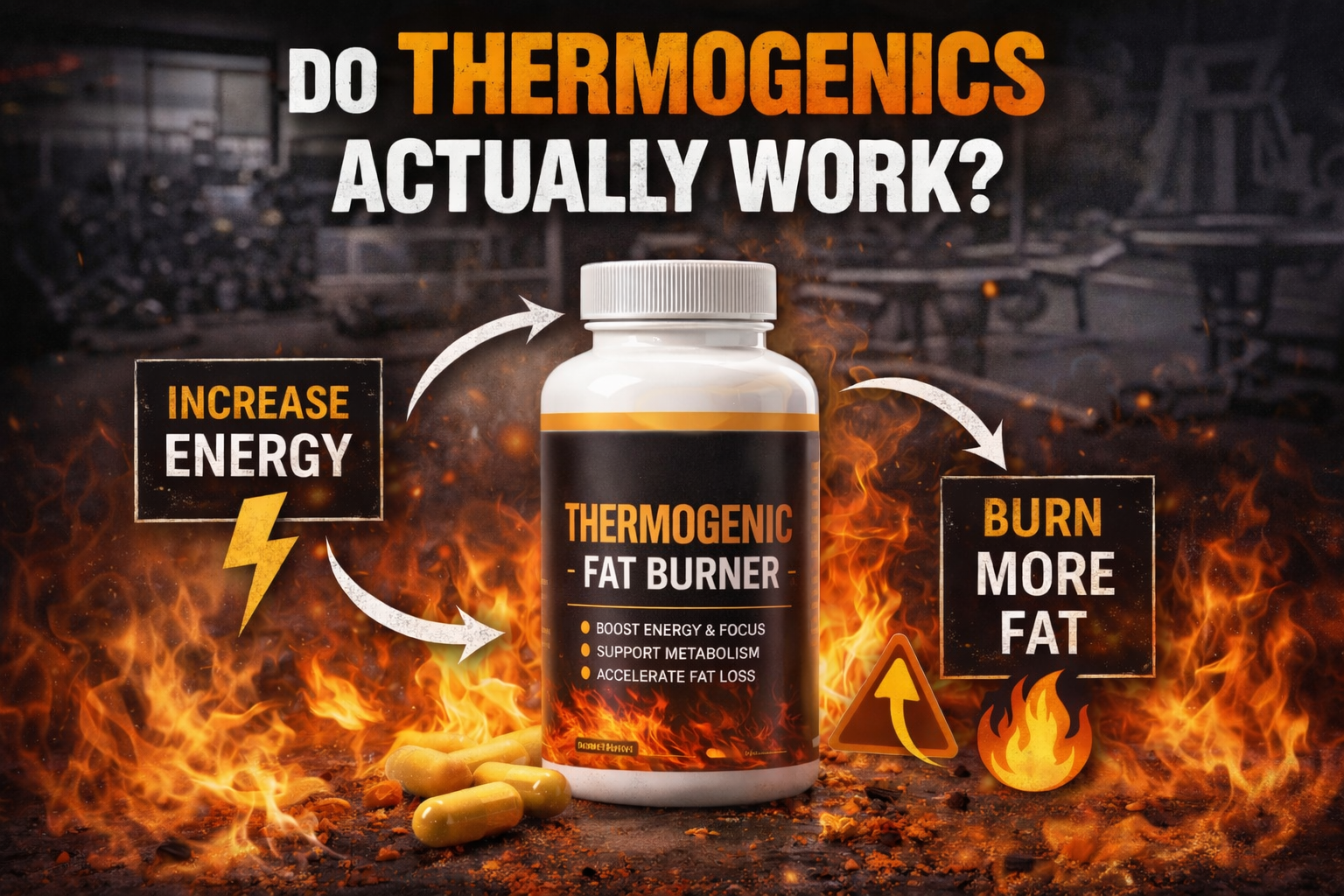
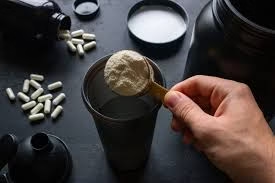
Pre-workout has become the go-to ritual for lifters, runners, and anyone who wants to squeeze a little more out of their training. You mix a scoop, feel that tingle, and suddenly the gym feels a lot lighter. But with all the hype, there’s also a growing question floating around online.
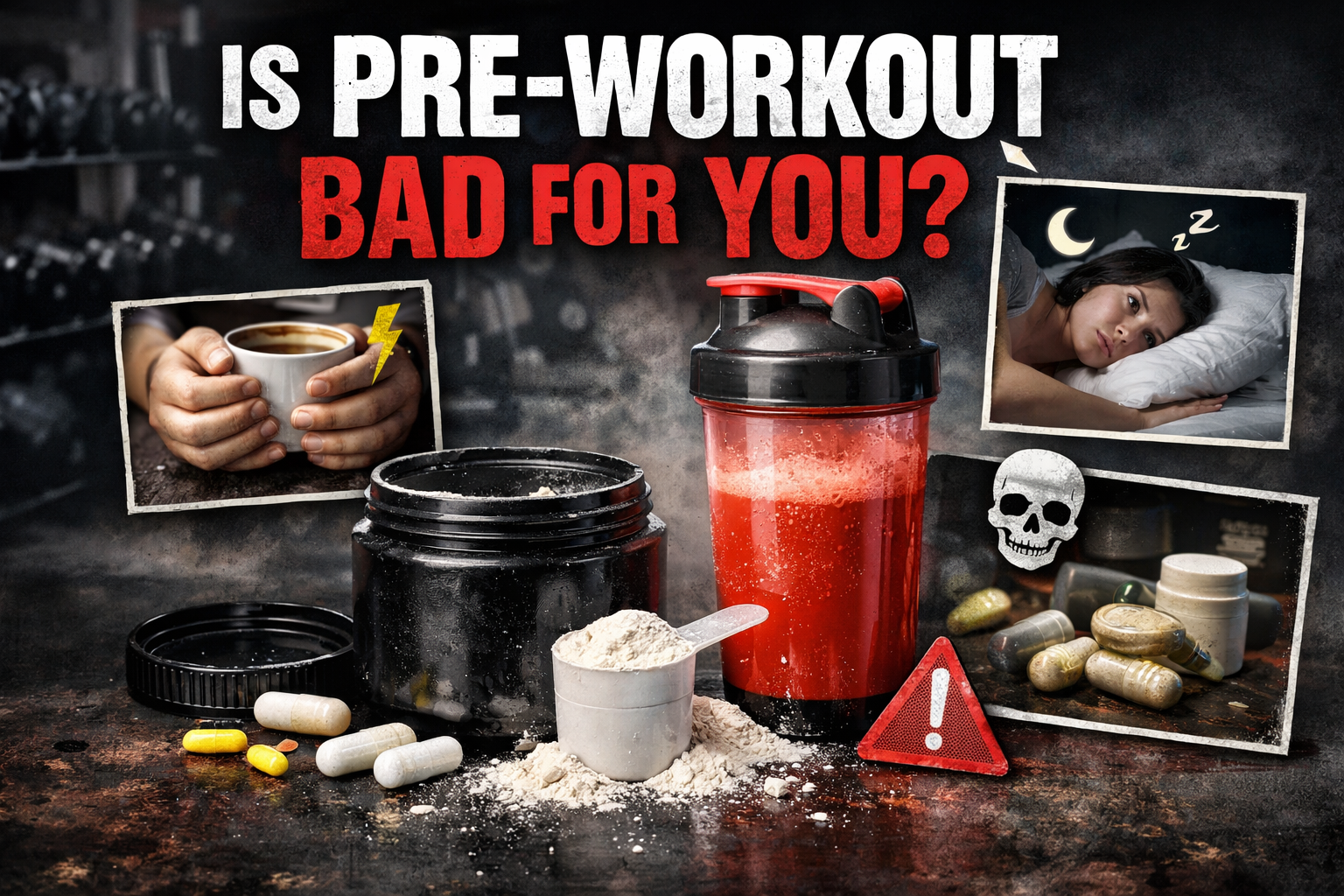
Is pre-workout actually bad for you?
The honest answer is simple. It can be perfectly safe when used correctly, and it can cause issues when you abuse it or take low-quality formulas. The key is understanding what’s inside your pre-workout and how your body responds to those ingredients.
Let’s break it down in a real, no-nonsense way.
1. The Caffeine Question
Most concerns come from caffeine. A lot of pre-workouts have anywhere from 150 mg to 400 mg per scoop. For most people, that’s fine. Problems happen when someone starts doubling scoops, mixing it with energy drinks, or taking it too late in the day.
Too much caffeine can cause:
- Jitters
- Anxiety
- Heart palpitations
- Terrible sleep
- A crash later in the day
If you stick to a reasonable dose and avoid massive stimulant blends, you’re usually good.
2. Beta-Alanine Isn’t Dangerous, Just Annoying
That “tingle” feeling isn’t your face melting. It’s just paresthesia, a harmless sensation from beta-alanine. Some people love it, others hate it, but it’s not harmful.
If the tingles bother you, look for lower doses or split your serving.
3. Cheap Ingredients Are the Real Problem
This is where people actually can get hurt.
A lot of low-quality pre-workouts use:
- Under-dosed pump ingredients
- Stimulants with questionable safety
- Proprietary blends that hide weak formulas
- Artificial colors and fillers
Good pre-workouts use clinical doses and full, transparent labels. When you know what you’re taking, you can make good decisions.
4. Your Sleep, Stress, and Lifestyle Matter
Even a great pre-workout can work against you if:
- You’re taking it at 6 or 7 pm
- You’re relying on it because you’re exhausted
- You’re caffeinated all day already
Pre-workout should enhance training, not compensate for poor sleep or burnout.
5. Long-Term Use Isn’t Bad, But Cycling Helps
Taking pre-workout long term is generally fine for healthy adults. But if you want to avoid tolerance buildup, take a few days off each week or switch to a lower-stim formula on lighter training days.
So Is Pre-Workout Bad for You?
Not by itself. What’s bad is:
- Taking way too much
- Taking low-quality products
- Ignoring your overall caffeine intake
- Using it to replace rest, food, and hydration
A well-formulated pre-workout can actually make training safer. Better focus means better form. Better energy means less wasted reps. Better pumps mean better blood flow and better workouts.
If you stick with solid ingredients, respect the caffeine dose, and pay attention to how you feel, pre-workout is not something to fear.
Final Thought
Pre-workout is a tool. Used right, it improves performance, motivation, and training quality. Used wrong, it can mess up your sleep, increase anxiety, and leave you dependent on it just to feel normal.
Choose quality. Read labels. Listen to your body.